


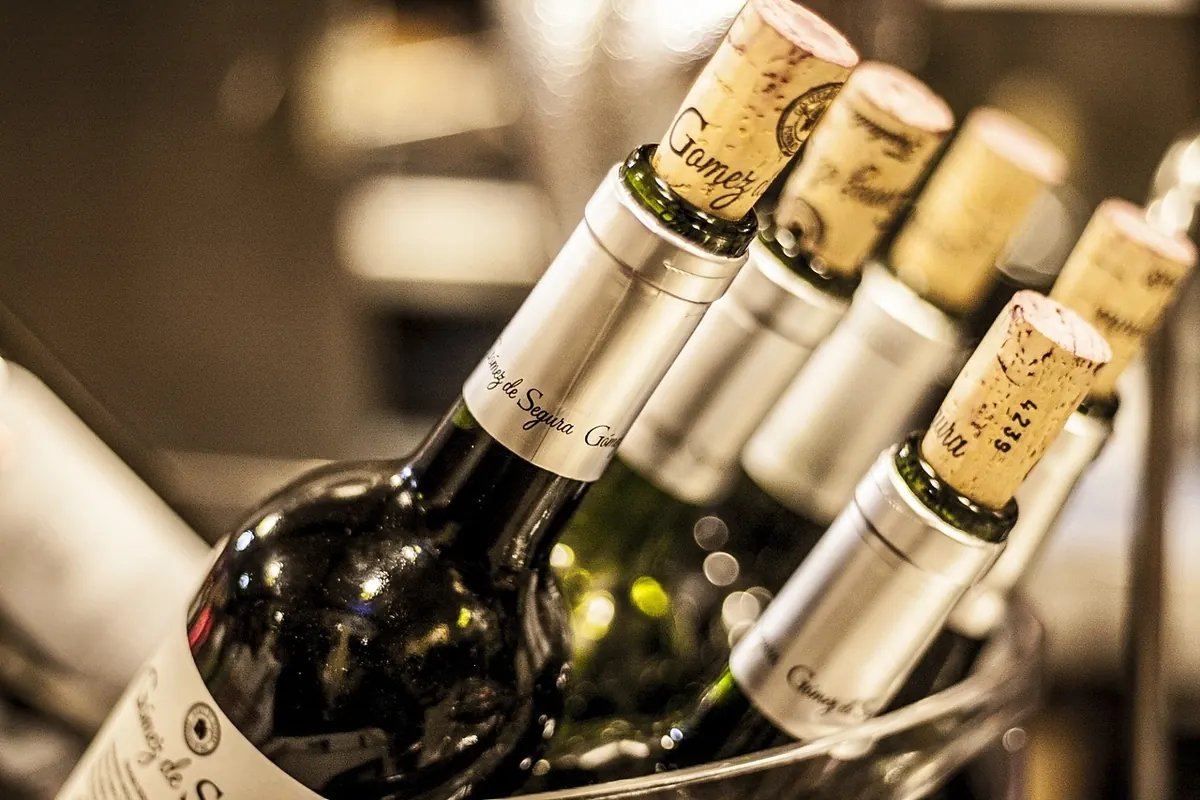



There is a version of opening sparkling wine that ends with a cork ricocheting off the ceiling, wine on the wallpaper and a scramble for the tea towel. It looks good on film. In a normal kitchen it usually means warm wine spraying over your guests and a cork nobody can find. Opening a bottle quietly takes about twenty seconds and a little technique — and it starts well before you touch the wire cage.
Chill the Bottle First
Temperature is the one thing you control before you even pick the bottle up. A warm bottle holds more pressure in the headspace and foams far more aggressively when the gas escapes. Cold wine behaves itself: the bubbles stay dissolved, the cork eases out, the pour is calmer.
A bottle needs real time in the fridge — three hours minimum, overnight if you can, because the glass and the wine take a while to chill through. In a hurry, an ice bucket filled with ice and cold water, plus a couple of handfuls of salt, will do the job in twenty to thirty minutes. The freezer is a shortcut with a sting: fifteen to twenty minutes, with a timer set. Forget it and you risk a cracked bottle and a mess that is genuinely unpleasant to clear up.
How cold is right?
Most non-vintage Champagne, Cava, Prosecco and English sparkling wines show best somewhere around 6–8°C. Straight from a fridge set to 4°C they are a touch too cold, so let the bottle stand for ten minutes before opening. The aromas open up and the wine still pours calmly. Richer, sweeter styles can be served slightly warmer, but not warm.
Before You Touch the Cage
- Stand the bottle upright for a few minutes if it has been lying down, especially an older bottle where sediment settles.
- Never shake a bottle to "wake it up". None of the bubbles need encouragement.
- Keep it out of direct sun, and carry it by the base rather than the neck.
- Have your glasses out and a clean cloth within reach before you start.
Undo the Cage, Keep Your Thumb in Place
Peel the foil away from the neck — you only need the top section, below the lip of the wire cage. Keep the bottle upright at this point and rest your thumb on top of the cork. Now loosen the wire loop with about six half-turns. The cage should feel slack, but do not lift it off. Leave it sitting loosely over the cork: it gives your hand grip, and if the cork starts to move you have a safety net.
Two things worth saying plainly. Never use a corkscrew on a sparkling bottle, and never prise at a stubborn cork with a knife. If the cork will not shift, the bottle is probably too warm — put it back in the ice for twenty minutes and start again.
The Grip and the Twist
This is where the quiet opening happens.
- Angle the bottle to about 45 degrees, pointing away from you, from anyone else, and from windows, lamps and televisions. Outdoors, or over a sink, is ideal.
- Put one hand on the base and the other over the cork, with the heel of that hand on the neck and your fingers wrapped around the cage. Keep your thumb over the top of the cork.
- Turn the bottle, not the cork. Rotate the base slowly with your lower hand while the upper hand holds the cork still. The cork should begin to ease upward.
- Let it out gently. Keep your palm over the cork as it rises so it stays captive — you are aiming for a soft hiss of escaping gas, not a bang.
- Hold the bottle at that angle for a few seconds before pouring. It reduces the amount of foam you will get in the glass.
If you feel the cork surging, stop twisting. Hold it in place and let the pressure bleed off slowly before you carry on.
Pouring Without the Fountain
Tilt each glass to 45 degrees and pour down the inside wall, filling no more than a third. Pause while the foam settles, then top up to about two-thirds. Pour a full glass in one go from an upright bottle and the wine drops through its own bubbles, which means mopping the table shortly afterwards.
A few small adjustments make a real difference:
- Use clean, dry glasses. Traces of detergent or rinse water flatten the foam and leave the wine looking tired within minutes.
- Keep the bottle in an ice bucket or a cool spot between pours. A bottle that warms up on the table behaves far worse by the second glass.
- Tulip-shaped glasses are better for aroma than narrow flutes, though flutes hold their bubbles longer. Either is fine — just do not fill to the brim.
- Run a damp cloth around the neck if drips are bothering you.
Mistakes That Cause the Bang
- Serving a bottle straight from a warm car boot or a sunny table.
- Shaking or tapping it for effect.
- Using a corkscrew, or pulling the cage off entirely before opening.
- Aiming the bottle at a person, a window or a light fitting.
- Pushing a spoon handle into the neck to keep the fizz in. It does not work; a proper sparkling wine stopper and the fridge will hold it for a day or two at best.
- Trying sabrage after watching one video. It works, but it is a skill for someone who has practised on plenty of bottles, and it is not the quickest route to a calm pour.
Make It a Habit
Cold bottle, thumb on the cork, twist the bottle rather than the cork, angle the glass. That is the whole routine, and after two or three bottles it becomes automatic — you will open the next one without thinking about it and the room will barely notice the sound. If you want to practise, buy an inexpensive Cava or Crémant and open it in the garden. A quiet, controlled hiss is the sign you have done it properly: the gas has left slowly, and the wine has stayed in the bottle where it belongs.
Photo: Pexels / Pixabay